Falls are one of the most common reasons older people lose confidence at home — but many falls are preventable.
With a few practical changes and the right supports, you can stay steady, safe, and independent in your own home.
Why do falls happen at home?
Most falls happen in familiar places: the bathroom, bedroom, kitchen, or outdoors near steps and paths. Falls usually occur because of a mix of physical changes and home hazards, not because someone has “done something wrong.”
Common Fall Risk factors for older people
- Reduced balance or leg strength (often after illness or less activity)
- Medication side effects, such as dizziness or low blood pressure
- Vision changes that make obstacles more challenging to see
- Foot problems or poor footwear
- Clutter or low lighting in walkways
- Unsafe bathrooms or stairs without rails or non-slip surfaces
Room-by-room Home Safety Checklist
Entrances and hallways
- Remove loose mats or secure them with non-slip backing.
- Keep walkways clear of bags, shoes, cords, and small furniture.
- Add bright lighting or motion-sensor lights to avoid disorientation, especially at night.
Bathroom
- Install grab rails near the toilet and shower.
- Use a non-slip mat in the shower and on the bathroom floor.
- Consider a shower chair if standing is tiring or unsteady.
Bedroom
- Keep a lamp within reach of the bed.
- Ensure a clear path to the bathroom.
- Store everyday items (glasses, phone, medications) bedside to avoid rushing.
Kitchen and living areas
- Keep frequently used items at waist height.
- Avoid climbing on chairs or step stools.
- Make sure rugs are flat or removed.
Stairs and outdoor paths
- Install handrails on both sides if possible.
- Repair uneven paving or loose steps.
- Keep paths well-lit and free of leaves or debris.
Simple exercises to improve balance and strength
Doing gentle balance and leg-strength exercises most days can reduce the risk of falls. Start slowly and hold onto a sturdy chair if needed.
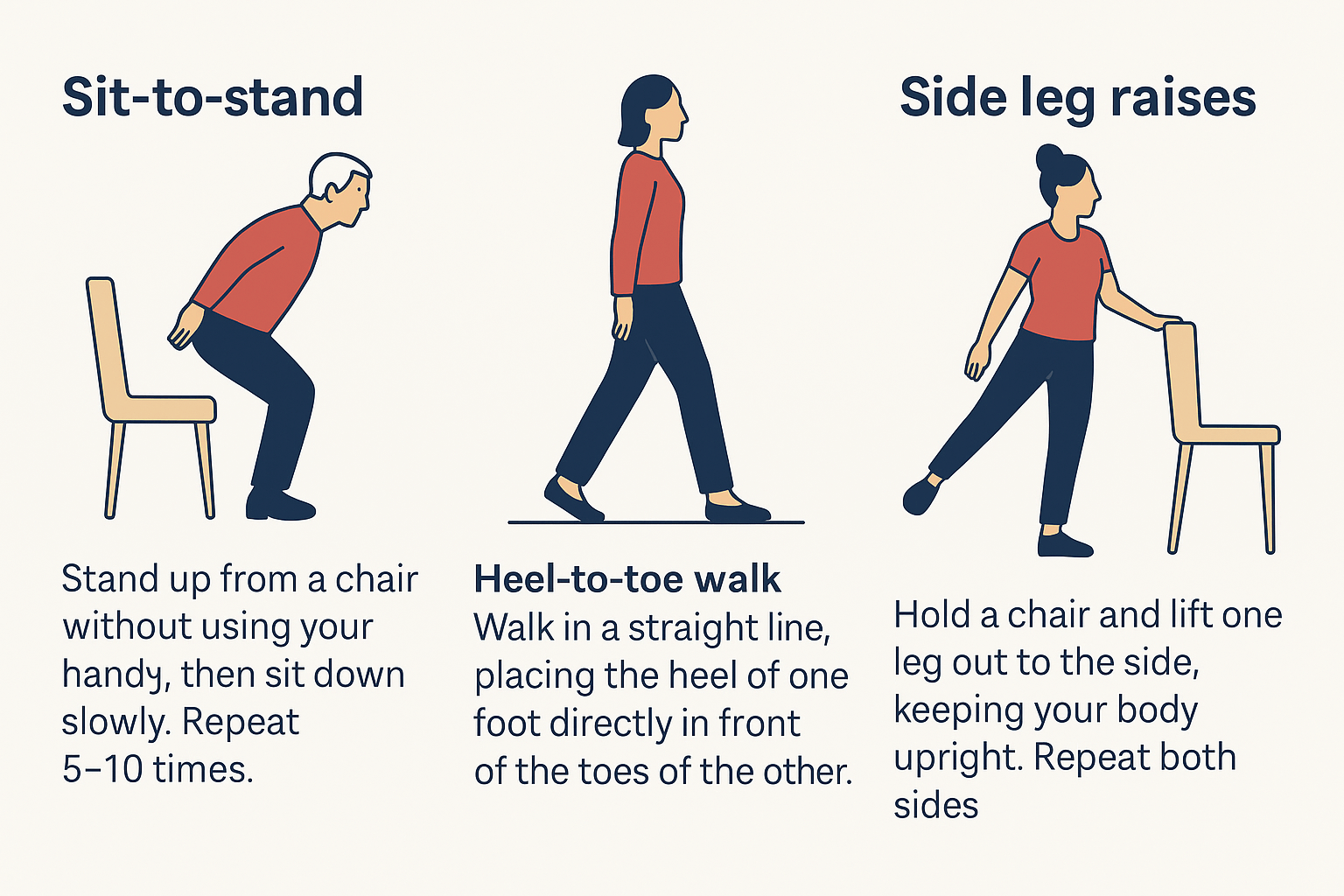
- Sit-to-stand: Stand up from a chair without using your hands, then sit down slowly. Repeat 5–10 times.
- Heel-to-toe walk: Walk in a straight line, placing the heel of one foot directly in front of the toes of the other.
- Side leg raises: Hold a chair and lift one leg out to the side, keeping your body upright. Repeat both sides.
If you feel unsure, a Physiotherapist or Occupational Therapist can recommend safe exercises tailored to you. Talk to your local Just Better Care about these options.
Mobility supports that can help.
Walking aids can make a big difference to confidence and stability. The key is choosing the right mobility aid and having it fitted correctly.
- Single-point cane (for mild support)
- Quad cane (for more stability)
- Walker or rollator (for ongoing balance and endurance support)
Check vision and medications
Regular eyesight checks and a simple medication review with your GP can reduce dizziness, blurred vision, and unsteadiness.
When does extra help at home make sense?
If daily tasks feel risky — like showering, cooking, or walking outdoors — getting support early can prevent a fall before it happens.
How can Just Better Care support Falls Prevention?
We can provide practical supports that keep you safe at home, including assistance with personal care, mobility, and home safety routines, and we can connect you with allied health services.
Talk with your local Just Better Care team to organise support that matches your needs.
Falls prevention FAQs
What are the early signs that someone is at higher risk of falling?
Feeling unsteady, needing furniture to walk, fear of showering alone, or avoiding outings due to balance concerns are all early signs.
What exercise helps most to prevent falls?
Routine balance and leg-strength exercises (like sit-to-stand and heel-to-toe walking) are among the most effective.
Do walking aids really reduce falls?
Yes — when fitted and used correctly, aids improve stability and reduce risk, especially during fatigue or outdoor walking.
.png?width=1201&height=623&ext=.png)
.png?width=1200&height=623&ext=.png)