In this article:
A large-scale study of almost a million couples found spouses of people with dementia face a significantly higher risk of developing it themselves. Risk was lower for couples with higher incomes and more children, but researchers stress this isn't inevitable. Looking after carer wellbeing, through respite, sleep, social connection and cardiovascular health, remains one of the most practical ways to reduce riskNew research published in the Journal of the American Medical Association has found that when one partner in a marriage develops dementia, the other partner faces a meaningfully higher risk of developing it too. The study, which followed close to a million couples in Taiwan over more than two decades, is one of the largest of its kind and adds important context for families and carers across Australia.
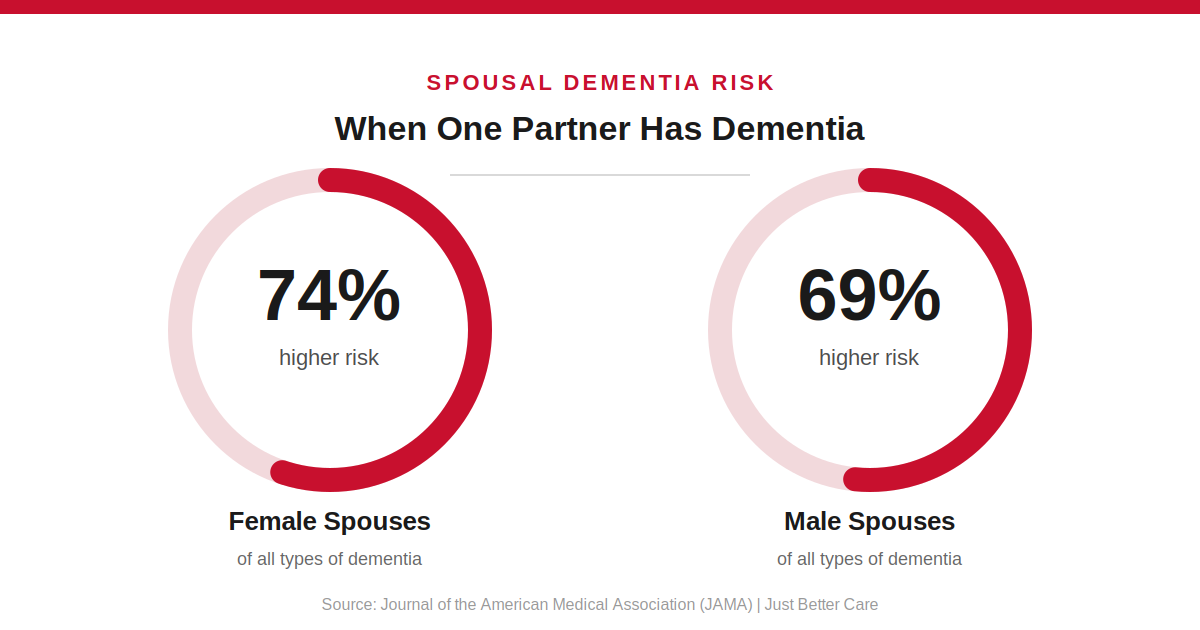
Researchers found that female spouses had a substantially higher risk of developing dementia if their partner had already been diagnosed, and male spouses faced a similarly elevated risk. The pattern held across the main forms of dementia, including Alzheimer's disease and vascular dementia.
Why Does This Happen?
The study's authors point to three overlapping explanations. Couples often share similar backgrounds and education levels to begin with. They also tend to share lifestyle habits over decades of marriage, including diet, exercise and even oral health, all of which are linked to cognitive outcomes. And where one partner becomes the primary carer, the stress, disrupted sleep and social isolation that can come with caregiving are themselves recognised risk factors, several of which are outlined in the World Health Organisation's dementia fact sheet.
Know the Modifiable Risk Factors
Up to 45 per cent of dementia cases are linked to factors that can be managed or reduced.
Explore the full list in the World Health Organisation's dementia fact sheet.
Lead author Dr Chi-Shin Wu noted that earlier research had often assumed every spouse was acting as a primary carer, which limited how clearly the risk could be understood. This study looked at outcomes for spouses generally, not just those in a caregiving role, giving a clearer picture at the household level.
Income and Family Size Made a Difference
One of the more notable findings was that couples with higher incomes and more children tended to have a lower associated risk.
The researchers suggest this may reflect greater access to support and resources in higher-income households, and more potential for family members to share the caregiving load. Experts not involved in the study also pointed out that income is often linked to education, which is separately known to help protect against cognitive decline.
It's worth noting, though, that having more children doesn't automatically mean more support is available. Family relationships and proximity matter just as much as family size.
Related Reading
Home Matters: Dementia-Friendly Design for Better Aged Care at Home
How the right environment can support independence regardless of the level of family support available.
Read the article →What This Means for Carers
The researchers were clear that an increased risk is not the same as a certainty, and this kind of study cannot prove that caregiving itself causes dementia. Spouses and family carers shouldn't feel blamed, or assume the condition is inevitable for them.
That said, the findings reinforce something we see often in home care: looking after the carer is just as important as looking after the person receiving care.
Related Reading
Supporting Families Living With Dementia at Home
A closer look at what it takes to support both the person living with dementia and the people who care about them most.
Read the article →A few practical takeaways from the research:
- Carers should prioritise their own sleep, mood and social connections, not just the needs of the person they're supporting.
- Managing cardiovascular health, including blood pressure and diabetes, matters for the carer as well as the person with dementia.
- Accessing respite care, even in small regular doses, gives carers a genuine chance to recharge.
- Staying socially engaged and physically active are protective factors worth building into daily routines wherever possible.
At a system level, the study's authors argue that dementia care and support services need to think about the whole household, not just the person with the diagnosis. That's a principle that sits at the heart of good in-home aged care and respite support.
If this article has raised any questions or concerns, the National Dementia Helpline is available 24 hours a day, 7 days a week on 1800 100 500, or you can visit Dementia Australia for further information and support.
Looking After a Loved One With Dementia?
Your local Just Better Care office can help with personalised dementia support, respite care and guidance every step of the way.
Find Your Local Just Better Care OfficeFrequently Asked Questions
Does having a spouse with dementia increase my own risk?
Research suggests it can. A large study of almost a million couples found that spouses of people with dementia had a meaningfully higher risk of developing it themselves compared to couples where neither partner had a diagnosis. This doesn't mean it's inevitable, but it's a useful reason to look after your own health alongside caring for your partner.
Does caregiving itself cause dementia?
No. The study's authors were clear that an increased risk is not the same as a certainty, and their observational research doesn't prove that caregiving causes dementia. Carers should not feel blamed or assume the condition is inevitable for them.
Why would income and family size affect dementia risk?
Researchers suggest higher income households may have greater access to support and resources, easing some of the pressure on the caring spouse. More children can also mean more potential family support, though this depends on the quality of the relationship and how close family members live.
What can carers do to protect their own health?
A few practical steps stand out from the research: prioritising sleep, mood and social connections, managing cardiovascular health such as blood pressure and diabetes, staying physically active, and accessing respite care regularly rather than waiting until burnout sets in.
Where can I get support if I'm caring for someone with dementia?
Just Better Care offices provide personalised dementia support and respite care across Australia. You can also contact the National Dementia Helpline on 1800 100 500, available 24 hours a day, 7 days a week, or visit Dementia Australia for further information and resources.
Full Coverage
Read the full story from ABC News.