In This Article:
My Aged Care terminology feels overwhelming mainly because it's unfamiliar, not because it's genuinely complicated. Once you understand the four main clusters, assessment pathways, care package structure, provider roles, and subsidy and fee terms, the system becomes far easier to navigate with confidence.There is a particular kind of overwhelm that arrives with a diagnosis, a fall, or a quiet realisation that Mum or Dad isn't managing quite as well as they used to, and close behind it comes a wall of paperwork, a government portal, and a vocabulary that seems designed for policy analysts rather than a worried adult child at the kitchen table. Terms like "means assessment," "registered supporter," and "Support at Home" get used as though everyone already understands them, but almost no one does at first, and that lack of clarity, not a lack of good options, is one of the most common barriers to getting care sorted. The good news is that once unpacked, this terminology is far less complicated than it first appears, and understanding it is entirely achievable, turning the experience of arranging care from something that happens to a family into something a family actively directs.
The trick is not to learn the entire My Aged Care glossary, but to get comfortable with a handful of term clusters that come up again and again: how an assessment actually works, what a package of funded support is meant to cover, who the different people and organisations involved actually are, and how the fees and subsidies fit together. Once those pieces make sense, the rest of the system tends to follow naturally.
This guide works through each cluster in plain English, with practical context on how it plays out day-to-day.
Why the Language Matters More Than It Should
My Aged Care exists to connect older Australians with subsidised support, and its official glossary runs to dozens of terms covering assessments, funding, provider obligations, and legal arrangements. Each term has a precise meaning with real consequences attached to it. Misreading "accommodation payment" as the same thing as a "basic daily fee," for instance, or assuming a "registered supporter" has the same authority as an "enduring power of attorney," can lead to real delays or misunderstandings at a time when families can least afford them. Getting comfortable with a handful of key term clusters removes most of that risk.
Assessment Pathways: Where Every Journey Begins
Before any funded support begins, a person needs a Client Record with My Aged Care, created the first time they register. This record contains their details, assessment outcomes, and support plan.
From there, an aged care needs assessor, a trained professional who may be a clinical or non-clinical assessor, carries out either a home support assessment or a more comprehensive assessment depending on the level of need being considered.
The result of that process is usually described as a support plan, a document setting out agreed goals and eligible services intended to meet them. Importantly, being asked to "acknowledge" this plan simply means confirming an understanding of its contents; it is not the same as giving formal consent to every detail, and older Australians retain the right to question or adjust what is proposed.
This is also where the concept of a registered supporter becomes useful. A registered supporter helps a person make and communicate their own decisions, distinct from an enduring power of attorney or a court-appointed guardian, who may hold legal authority to make certain decisions on someone's behalf. Families are often surprised to learn these roles are not interchangeable, and clarifying the difference early avoids friction later in the assessment process.
Care Package Levels and What "Support at Home" Actually Covers
Much of the confusion families describe centres on what a package of funded support actually buys.
In practice, home-based funding is intended to cover a defined mix of services: personal care such as help with bathing and dressing, domestic help like cleaning and laundry, allied health support from physiotherapists or occupational therapists, goods and equipment such as mobility aids, and social support to keep someone connected to their community.
Short-term options such as respite care and transition care sit alongside these, giving carers a break or bridging the gap between a hospital stay and a safe return home. The underlying philosophy, often referred to as re-ablement, is about helping someone regain or maintain independence rather than simply doing things for them.
Understanding how these entitlements translate into a weekly routine is best explained by looking at how Support at Home services are delivered in practice, where funding levels are matched to a genuinely tailored roster of visits, therapies, and everyday assistance rather than a one-size-fits-all package.
For families comparing package types and trying to work out which pathway suits their situation, it's worth stepping back to look at how the aged care system is structured, since the right entry point depends heavily on current needs, location, and how quickly support is required.
Watch: How My Aged Care Can Help You
My Aged Care is the Australian Government's starting point on your aged care journey. This short video from the Australian Government Department of Health, Disability and Ageing gives an overview of what My Aged Care is and how it supports you to find and access the government-funded services you need.

Provider Terminology: Knowing Who Does What
The word "provider" gets used loosely, but the aged care system distinguishes between several distinct roles.
A registered provider is the organisation approved to deliver government-subsidised services, whether at home or in residential care. This is different from an agent organisation, whose employees can help a person navigate the system in a professional capacity but cannot make decisions on their behalf, and different again from an advocate, who speaks and acts on someone's behalf to protect their rights, sometimes formally through the National Aged Care Advocacy Program.
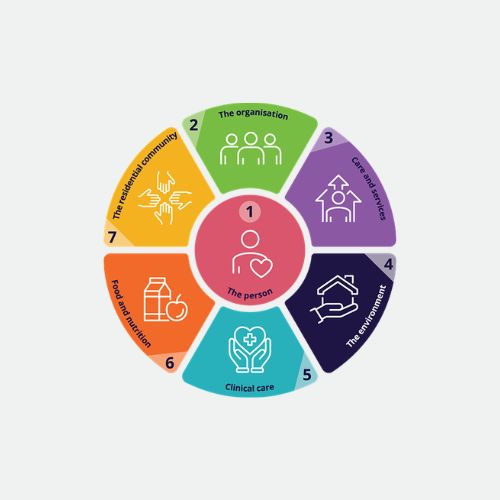
Quality oversight sits with the Aged Care Quality and Safety Commission, the independent regulator responsible for accreditation and for monitoring compliance against the Aged Care Quality Standards. Every older Australian receiving funded care is also covered by the Statement of Rights under the Aged Care Act 2024, which sets out entitlements including the right to engage an advocate of their own choosing. None of this needs to be memorised in detail, but recognising these terms when they appear in correspondence or on a provider's website makes it far easier to ask the right questions and know where to turn if something isn't working as expected.
Subsidy Structures: Government Funding, Fees, and Private Options
Fee terminology is where most families lose confidence, largely because so much depends on an individual's income and assets. A means assessment, or income and assets assessment for Support at Home, determines what a person contributes toward their own costs, while government subsidy covers the remainder.
Depending on the funded program, the category of services and the support services being delivered will impact on the co-contribution you may need to pay towards the cost of care. This will all be explained either by My Aged Care or your approved provider, such as your local Just Better Care office or Care Partner.
Not every family wants or is eligible for government-subsidised support, and that's a perfectly reasonable path, too.
Those exploring privately funded home care outside the government subsidy system avoid waiting periods and eligibility assessment queues altogether, paying directly for exactly the services required, which can suit people who want care to begin immediately or who fall outside standard eligibility settings.
Turning Understanding Into Confidence
None of this terminology is meant to be a barrier, even though it can feel like one on a first read. Every term traces back to a genuine attempt to standardise a complex system, and once the key clusters, assessment, package structure, provider roles, and subsidy mechanics are clear, the rest tends to fall into place quickly.
Just Better Care Care Partners work alongside families every day to translate this language into practical next steps, and the network continues to publish plain-English guidance, resources and family stories on the news and events resource hub as the system evolves.
We're here for you
Every Just Better Care office has a team of dedicated Care Partners who understand the government programs inside and out, and can help you navigate My Aged Care from your very first assessment through to your ongoing support.
Enquire with Your Local OfficeFrequently Asked Questions
What is the difference between My Aged Care and a home care provider?
My Aged Care is the Australian Government's central entry point for accessing subsidised aged care; the website and phone line where a person registers, the people who organise the assessment, and the organisation that issues the support plan. A home care provider, such as Just Better Care, is a separate registered organisation that actually prepares the care plan and delivers the day-to-day services once funding has been approved. Families generally need to engage with both: My Aged Care to establish eligibility and funding, and a provider to arrange and deliver the ongoing support.
What is the first step in applying for aged care support?
The process starts with creating a Client Record through My Aged Care, either online or by phone. This triggers an assessment with a trained aged care assessor, who determines the level of support required and helps develop a support plan. Only after this assessment is complete does government-subsidised funding become available with a registered provider.
What is the difference between a registered supporter and power of attorney?
A registered supporter helps a person make and communicate their own decisions and has no independent legal authority to decide on their behalf. An enduring power of attorney is a separate legal arrangement that can give another person the authority to make certain decisions when someone is no longer able to, depending on the laws of their state or territory. The two roles are often confused but serve very different purposes.
What does "Support at Home" actually cover?
Support at Home funding is intended to cover a tailored mix of services based on individual need, including personal care, domestic help, allied health support, goods and equipment, transport, and social support. The exact mix depends on the assessed level of funding and the goals set out in a person's support plan, rather than being a fixed, one-size-fits-all package.
How are aged care fees calculated?
Most fees are based on a means assessment, which looks at income and assets to determine how much a person contributes toward their own care, with government subsidy covering the remainder. Anyone genuinely unable to meet their contribution may be eligible for financial hardship provisions.
Can I access home care support without going through My Aged Care?
Yes. Privately funded home care sits entirely outside the government subsidy system, meaning there is no waiting period. This path can suit people who want immediate support, who fall outside standard eligibility criteria, or who simply prefer to arrange and pay for services directly.
Who can help me understand which options apply to me?
Every Just Better Care office has a team of Care Partners who work with My Aged Care terminology and processes daily. They can help explain assessment outcomes, funding options, and next steps in plain language, whether a person is pursuing government-subsidised support, privately funded care, or a combination of both.
Related Articles
- The glossary of My Aged Care terminology
- Five tips to maximise your Home Care Package (now Support at Home) funding
- How healthcare providers can refer patients to privately funded in-home care
- What Australia's rapidly ageing population means for the aged care system
- New financial year changes older Australians and carers should be aware of
- How to leave a Google review for your local home care provider