Podiatry is one of those services that tends to get put off until a thickened nail becomes painful, a foot problem starts affecting your balance, or a GP raises concerns about diabetic foot health.
The good news is that accessing a podiatrist in Australia is straightforward: no referral is needed, appointments can be held at home, and, for older Australians in the Support at Home program, podiatry is often funded as part of your care plan based on your assessed needs.
What is a Podiatrist?
A podiatrist is a health professional who specialises in diagnosing and treating conditions affecting the feet, ankles and lower limbs. In Australia, podiatrists complete a four-year university degree in podiatric medicine and are registered with the Australian Health Practitioner Regulation Agency (AHPRA).
They are allied health professionals, not medical doctors, but they are qualified to assess, diagnose, prescribe orthotics, and, in many cases, perform minor procedures such as treating ingrown toenails.
Podiatrists work across a wide range of settings: private clinics, hospitals, aged care facilities and increasingly, in people's homes as part of the Support at Home program.
Is a podiatrist a doctor?
A podiatrist is not a medical doctor (GP), but they are a registered health professional with specialist clinical training. In Australia, podiatrists hold a degree in podiatric medicine and are regulated by AHPRA under the same framework as physiotherapists, occupational therapists and other allied health professions.
Some podiatrists undertake additional training to become podiatric surgeons, who are qualified to perform surgical procedures on the foot and ankle.
What is the difference between a chiropodist and a podiatrist?
A chiropodist and a podiatrist are the same profession. "Chiropodist" is an older term that was commonly used in the UK and Australia until the 1990s, when the title "podiatrist" became the standard.
You may still see the word chiropodist used, particularly by older Australians, but the two terms are interchangeable. All registered practitioners in Australia today use the title podiatrist.
Related reading
Allied Health at Home: Accessing Services Identified in Your Support at Home Assessment
Learn how allied health services, including podiatry, are identified through your Support at Home assessment and included in your support plan and Notice of Decision.
What Does a Podiatrist Do?
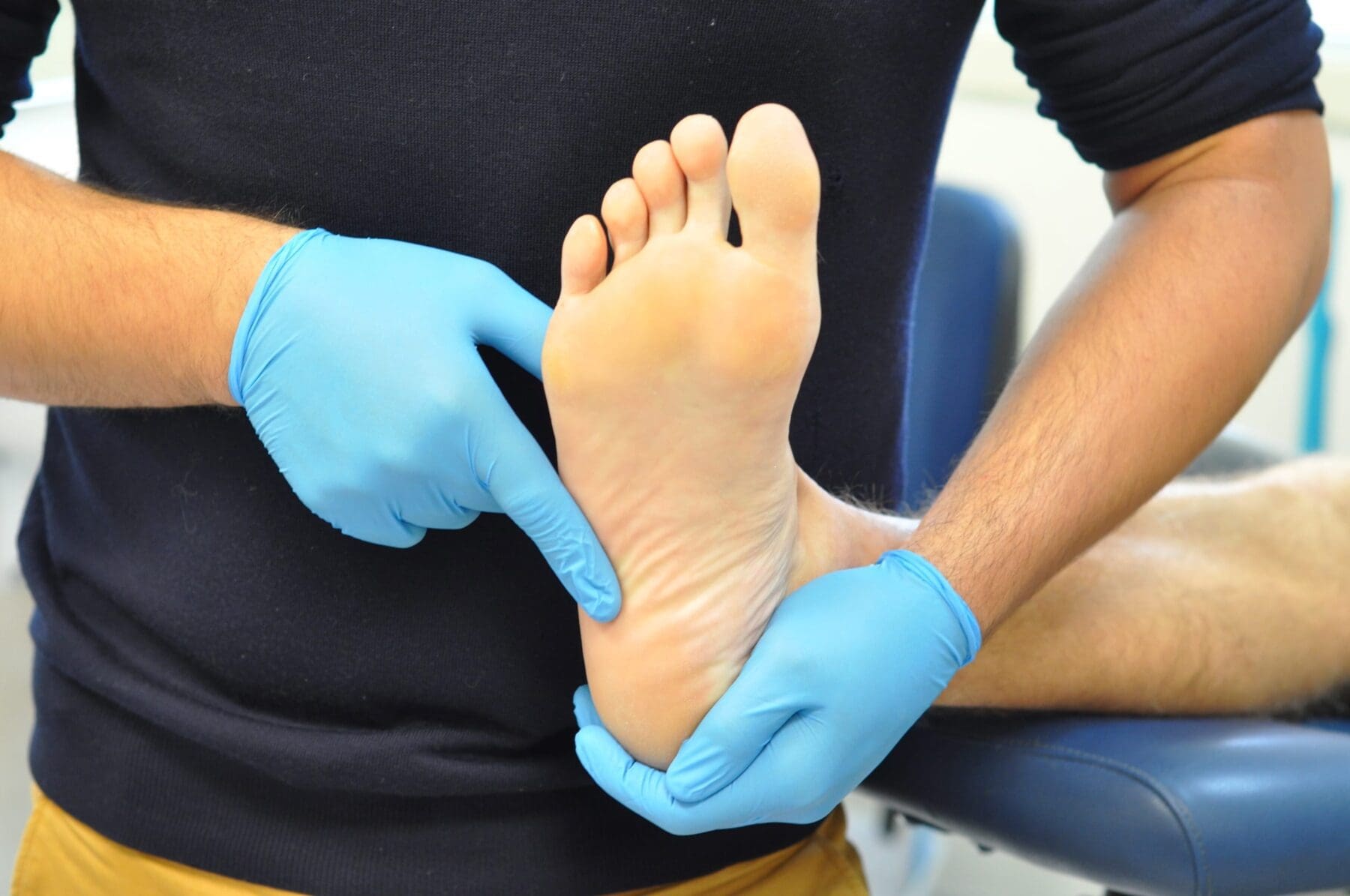
Podiatrists assess, diagnose and treat a wide range of conditions affecting the foot and lower limb. For older Australians in particular, podiatry plays a critical role in maintaining mobility, managing chronic health conditions, and reducing the risk of falls.
Nail and skin conditions
- Ingrown toenails are one of the most common reasons people see a podiatrist. A podiatrist can remove the affected nail edge and, if needed, perform a minor procedure to prevent recurrence.
- Thickened or fungal nails — common in older adults, particularly those who have difficulty reaching their feet
- Corns and calluses — caused by pressure or friction, often from ill-fitting footwear.
- Cracked heels and dry skin
- Plantar warts — including cryotherapy or acid-based treatments
Foot pain and structural conditions
- Heel pain and plantar fasciitis
- Arch pain and flat feet
- Bunions and hammertoes
- Arthritis affecting the feet and ankles
- Ball of foot pain (metatarsalgia)
- Achilles tendon pain
Diabetes and circulation
For people living with diabetes, regular podiatry care is especially important. Diabetes can reduce circulation and sensation in the feet, making small wounds or pressure points much more serious if left undetected. A podiatrist can perform regular diabetic foot assessments, manage wounds, and help prevent complications that can otherwise lead to hospitalisation.
Orthotics
Podiatrist-prescribed orthotics are custom-made or prefabricated insoles designed to correct foot alignment and relieve pain. A podiatrist will assess your gait and foot structure before prescribing orthotics, which can be particularly helpful for arthritis, heel pain, and conditions affecting mobility and balance.
Falls prevention and mobility
For older Australians, falls are a leading cause of injury and hospitalisation. A podiatrist can assess how your foot health and footwear affect your balance and walking pattern, recommend supportive footwear, and work alongside physiotherapists to reduce your falls risk.
Related reading
Falls Prevention at Home for Older People
Good foot health plays a direct role in balance and stability. Find out how older Australians can reduce their risk of falls at home.

Do You Need a Referral to See a Podiatrist?
No, you do not need a referral to see a podiatrist in Australia. You can book an appointment directly at a podiatry clinic without visiting your GP first. This makes podiatry one of the most accessible allied health services available.
However, there are some situations where a referral is helpful or required:
- Medicare Enhanced Primary Care (EPC) plan — if you have a chronic health condition and your GP sets up a GP Management Plan, you may be eligible for up to five Medicare-subsidised allied health visits per calendar year. A GP referral is required to access this podiatry rebate.
- Support at Home Program — if you want podiatry funded through Support at Home, your Just Better Care Care Partner can arrange this, provided it appears in your support plan. A GP referral is not always required for this pathway. See the section below for more details.
- DVA (Department of Veterans' Affairs) cardholders — eligible veterans can access podiatry through DVA, which may require a referral depending on your card type.
If you are unsure which pathway is right for you, your GP or your local Just Better Care Care Partner can advise you on the options available to you, depending on your individual circumstances, including self-funded private home care.
How Much Does it Cost to See a Podiatrist?
The cost of seeing a podiatrist in Australia varies depending on the type of appointment, the provider, and how you access the service.
Private podiatry appointment
A standard private podiatry consultation typically costs between $80 and $150 for an initial appointment, and $60 to $120 for follow-up visits. Complex procedures such as nail surgery or custom orthotics will cost more.
Most private health insurance extras cover includes podiatry, check your policy for annual limits and rebate amounts. This price can also vary based on travel costs and location; it's best to confirm the price at the time of making the appointment.
Bulk billing podiatrist
This is where Medicare covers the full cost of podiatry with no out-of-pocket expense. This is available in some circumstances but not universally. To access a bulk-billing podiatrist, you generally need to be on a GP Chronic Condition Management Plan (GPCCMP), previously referred to as an EPC (Enhanced Primary Care plan), that includes podiatry, and your podiatrist must accept bulk billing for allied health visits.
From 1 July 2025, Medicare's Enhanced Primary Care (EPC) was replaced by the GP Chronic Condition Management Plan (GPCCMP). The 5-visit annual entitlement and the requirement for a GP referral remain the same. Find out more about the GPCCMP changes.
Availability of bulk-billed prodiatry varies by location and practitioner, so it is worth calling ahead to confirm before booking.
Podiatry through the Support at Home program
If you are a participant in the Support at Home program, podiatry can be funded through your quarterly budget when it is included in your support plan based on your assessed needs.
The cost is drawn from your government subsidy. Whether a co-contribution applies, and how much it is, will depend on your individual means assessment conducted by Services Australia. You will be notified of any co-contribution amount in your Notice of Decision.
Private podiatry arranged by Just Better Care
If you are not a participant in the Support at Home program, or you'd like to arrange podiatry on a private basis, your local Just Better Care team can also help. Customers find it helpful to have all their care arranged with one provider.
Our local care teams can connect you with a qualified podiatrist in your area and coordinate the appointment and transport if required, without needing to navigate the referral process yourself.
Is a podiatry visit like a pedicure?
A podiatrist is not the same as a salon pedicure. A podiatrist is a registered health professional who treats medical conditions of the foot, including nail conditions, wounds, infections, and structural problems, using clinical techniques.
For older Australians, or anyone with diabetes, circulation issues, or nail infections, a podiatrist is always the more appropriate clinical option than a beauty salon.
Support at Home
Understanding the Support at Home Program
Find out how the program works, eligibility, how to get started and how your quarterly budget is used to fund services like allied health services, such as podiatry,y as well as ongoing support services in your home and local community.
Accessing Podiatry with the Support at Home program
For older Australians participating in the Support at Home program, podiatry is one of the most practical and commonly requested allied health services available at home. Rather than travelling to a clinic, often a podiatrist can visit you at home, making regular foot care accessible even for people with mobility challenges or limited transport options.
Under the Support at Home program, podiatry is classified as a Clinical and Therapeutic Care service.
If you're an older Australian, how do you access podiatry under the Support at Home program?
new to support at home?
Find out how it works, the eligibility criteria, the assessment process, and how Just Better Care can help you get started.
Services Available Under Support at Home
Costs and Co-Contributions Explained
Quarterly Budgets and Care Plans
Transitioning from a Home Care Package
Explore Support at HomeIf your needs change after your initial assessment and you feel podiatry would benefit you, speak with your Just Better Care Care Partner, who can assist you in requesting a reassessment or review of your support plan.
Common reasons podiatry is included in a Support at Home plan:
- Difficulty reaching the feet due to reduced mobility or flexibility
- Diabetes requires regular professional foot assessment
- Thickened or complicated toenails that are difficult to manage safely at home
- Foot pain affecting mobility and falls risk
- Need for custom orthotics or footwear assessment
Private podiatry through Just Better Care
If you're not eligible for the Support at Home program or would prefer to arrange podiatry privately.
Your local Just Better Care can also coordinate this for you; each local office works with a network of allied health providers and can connect you with a podiatrist in your area. Contact your local Just Better Care office to discuss your options.
Related reading
Allied Health at Home: Accessing Services Identified in Your Support at Home Assessment
Understand how the assessment process works, what a Notice of Decision includes, and how Just Better Care coordinates allied health services like podiatry as part of your agreed care plan.
Access Podiatry at Home with Just Better Care
Just Better Care coordinates podiatry and a full range of allied health services for older Australians under the Support at Home program or on a private-pay basis.
We have care teams across Australia, so wherever you are, there's a local
Just Better Care office near you.
Frequently Asked Questions About Podiatry
What is a podiatrist?
A podiatrist is a registered allied health professional who specialises in diagnosing and treating conditions of the foot, ankle and lower limb. In Australia, podiatrists complete a four-year degree and are registered with the Australian Health Practitioner Regulation Agency (AHPRA).
What does a podiatrist do?
A podiatrist treats conditions including ingrown toenails, thickened nails, corns and calluses, plantar warts, heel pain, diabetic foot concerns, and gait and balance problems. They can also prescribe custom orthotics and provide falls prevention advice for older adults.
Is a podiatrist a doctor?
A podiatrist is not a medical doctor (GP), but is a registered health professional with a four-year university qualification. They are regulated by AHPRA and qualified to diagnose and treat foot and lower limb conditions. Some podiatrists undertake further training to become podiatric surgeons.
What is the difference between a chiropodist and a podiatrist?
There is no clinical difference. Chiropodist is the older term for the same profession, commonly used in Australia until the 1990s. All registered practitioners in Australia are now titled podiatrists.
Do you need a referral to see a podiatrist?
No. You can book a podiatry appointment directly without a GP referral. However, a referral is required if you wish to access Medicare-subsidised visits through a GP Chronic Condition Management Plan (GPCCMP), which replaced the Enhanced Primary Care (EPC) plan from 1 July 2025.
How many Medicare-subsidised podiatry visits can I access per year?
If your GP sets up a GP Chronic Condition Management Plan (GPCCMP), you may be eligible for up to five partially Medicare-subsidised allied health visits per calendar year, including podiatry. A separate referral letter for podiatry is required. Referrals are valid for 18 months.
How much does it cost to see a podiatrist?
A private podiatry consultation in Australia typically costs between $60 and $150, depending on the appointment type and provider. Some podiatrists bulk-bill patients on a GPCCMP. If you are a participant in the Support at Home program and podiatry is included in your support plan, it can be funded through your quarterly budget.
See Costs and Co-Contributions for more details on how Support at Home funding works.
Can podiatry be funded through the Support at Home program?
Yes, when it is identified as a need through your aged care assessment. Podiatry is classified as a Clinical Support under the Support at Home services list, which means it is fully government-funded with no co-contribution required.
If approved, it will be included in your Notice of Decision and support plan, and Just Better Care will coordinate appointments as part of your agreed care plan.
Do I need a GP referral to access podiatry through the Support at Home program?
Not necessarily. If podiatry is identified during your ACAT assessment and included in your Notice of Decision, Just Better Care can coordinate podiatry as part of your care plan without a separate GP referral. Speak with your local care team for advice specific to your situation.
How does the Support at Home assessment work?
The ACAT assessment is arranged through My Aged Care and takes place in your home. An assessor will talk with you about your daily routine, health, and support needs. If podiatry is identified as a need, it will be reflected in your Notice of Decision and support plan. You can have a family member or carer with you during the assessment.
Will I have to pay a co-contribution for podiatry under Support at Home?
No. Podiatry is classified as a Clinical Support under the Support at Home program, which means the government fully funds it. Co-contributions apply to Independence and Everyday Living services, not clinical care. Your individual co-contribution amounts for other services will be outlined in your Notice of Decision following your means assessment by Services Australia.
See Costs and Co-Contributions for more information.
Can a podiatrist treat ingrown toenails?
Yes. Treating ingrown toenails is one of the most common procedures performed by podiatrists. They can remove the affected nail edge conservatively or perform a minor surgical procedure (partial nail avulsion) under local anaesthetic to prevent the condition from recurring.
Can a podiatrist prescribe orthotics?
Yes. Podiatrists can assess your gait and foot structure and prescribe custom or prefabricated orthotics to relieve foot pain, correct alignment, and support mobility. Orthotics can be particularly helpful for arthritis, heel pain, and conditions affecting balance and walking.
Why is podiatry important for people with diabetes?
Diabetes can reduce circulation and sensation in the feet, meaning small wounds or pressure points can go unnoticed and become serious if left untreated. Regular podiatry assessments help detect problems early, manage wounds, and reduce the risk of complications that can otherwise lead to hospitalisation. For Support at Home participants with diabetes, podiatry is commonly included in the care plan as part of Clinical Support.
Can a podiatrist help with falls prevention?
Yes. A podiatrist can assess how foot health and footwear affect your balance and walking pattern, recommend appropriate supportive footwear, and work alongside physiotherapists and other allied health professionals to reduce your risk of falling at home. See also: Falls Prevention at Home for Older People.
Can I access podiatry privately if I'm not a participant in the Support at Home program?
Yes. Just Better Care can arrange private podiatry for customers who are not participants in the Support at Home program, or for those who would like additional podiatry services beyond what their Support at Home funding caters for.
Our local care teams can connect you with a qualified podiatrist in local your area and coordinate the appointment and payment as part your ongoing support services.
Contact your local Just Better Care office to discuss your options.
What other allied health services are available through the Support at Home program?
The Support at Home program can fund a range of allied health services, including physiotherapy, occupational therapy, speech pathology, psychology, social work, and dietetics, when they are identified as needed through your assessment and included in your support plan.
Read more: Allied Health at Home: Accessing Services Identified in Your Support at Home Assessment.
What happens if my podiatry needs change after my assessment?
If your needs change, speak with your Just Better Care Care Partner. They can support you in requesting a reassessment through My Aged Care, or in reviewing your existing support plan to see whether podiatry can be added or adjusted within your current quarterly budget.
See "Support at Home: Quarterly Budgets and Care Plans" for more details.
How do I find a podiatrist near me through Just Better Care?
Your local Just Better Care care team can connect you with a qualified podiatrist in your area, either through your Support at Home program funding or privately.
Find your nearest Just Better Care office to get started, or visit our Support at Home page to learn more about what is available.
Related Reading
Allied Health at Home: Accessing Services Identified in Your Support at Home Assessment
How are allied health services, including podiatry, identified through your assessment and coordinated through your care plan?
Falls Prevention at Home: Safety Tips and Exercises for Older People
Practical guidance on reducing the risk of falls at home, including room-by-room safety changes and simple balance exercises.
Understanding the Support at Home Program
Everything you need to know about Support at Home, from eligibility through to ongoing care management.
The full list of defined services available under the Support at Home program, including Clinical Supports such as podiatry, and how each category is funded and which support services attract co-contrbutions
Support at Home Costs and Co-Contributions Explained
How co-contributions work, which services are fully government-funded, and what your Notice of Decision will tell you about your individual costs.
A guide to what happens during your aged care assessment, what to expect, and how the outcome connects to your support plan and Notice of Decision.
Top Assistive Technology and Home Modifications for Older Australians
How the AT-HM scheme under Support at Home can fund equipment and home modifications to improve safety and independence.
How private nursing and clinical care work for older Australians who want support outside of a government-funded program.
Useful External Resources
How to Get Assessed — My Aged Care
The official My Aged Care guide to applying for an aged care assessment online, by phone, or in person.
Support at Home Program — My Aged Care
The official government overview of the Support at Home program, including eligibility, services, and how to connect with a provider.
Income and Assets Assessments for Support at Home — My Aged Care
How Services Australia determines your co-contribution amount, and what information is used in the means assessment.
Support, education and resources for Australians living with diabetes, including guidance on foot health and complication prevention.