In this article:
The decision to stay at home as you age is rarely about one big intervention. It is usually a handful of small, well-timed ones. A grab rail in the bathroom, a cleaner once a fortnight, someone reliable for the parts of the week that have got harder. This article walks through the practical elements that make receiving help in the home for seniors genuinely work: a room-by-room home safety walk-through, preventing falls and home modifications worth considering to improve the safety in areas of your home.“Aging in place” is a term that gets used a lot, but it is worth pinning down what it actually means in practice.
It is the choice and a desire to keep living in your own home as you get older and maintain autonomy and independence, with the right mix of support around you to make living in your own home safe and comfortable.
The three criteria that tend to determine whether aging in place works for someone:
- The home environment: Is it set up so an older person can move around safely, manage the bathroom, get in and out of bed, and use the kitchen without falling?
- The daily living tasks: Which parts of the week, like help around the home, meal preparation, transport to appointments or personal care, have become harder, and who is helping with them?
- The safety net: If something goes wrong, like a fall, an illness, who is nearby to provide assistance and what plan is in place to recieve support?
Home safety checklist for seniors: A practical walk-through
One of the simplest exercises a family can do is walk through \ the home with fresh eyes spotting potential hazards and safety concerns.
Most homes were not designed with mobility issues that someone may experience in their late seventies or eighties. Small changes, many of them low-cost, can dramatically reduce the risk of a fall or injury.
When you next visit your friend or relative's home, use this home safety checklist to see where simple fixes may avoid issues.
Room 1 of 5
Bathroom
- Grab rails fitted next to the toilet and inside the shower
- Non-slip mat in the shower or bath
- A shower chair or stool if standing for long is becoming hard
- Hot water settings, it's recommended this is set at no higher than 50°C to prevent scalds
- A clear path from bedroom to bathroom, nothing to trip on at night
Room 2 of 5
Bedroom
- A lamp within easy reach of the bed
- Phone accessible from the bed in case of a fall
- Loose rugs removed or secured with non-slip backing
- A clear and will lit path to the bathroom
Room 3 of 5
Kitchen
- Frequently used items moved to easy-reach shelves.
- Nothing important above shoulder height or below the knee
- A sturdy step stool, never a chair, for anything higher
- Smoke alarms tested and within battery date
- An automatic kettle shut-off and kettle is on a stable service
Room 4 of 5
Living areas and hallways
- Loose rugs and trailing cords removed or secured
- Good lighting in hallways and stairwells, with switches at both ends
- Handrails on both sides of internal stairs, where possible
- Clear walking paths, furniture not creating awkward squeezes
Room 5 of 5
Entryways and outdoors
- Handrails on external steps and ramps
- A motion-sensor light at the front door and on approach to the boundary of the property
- Even, non-slip surfaces on paths and entry steps that are regularly cleared to avoid slipping hazards
- A spare key with a trusted neighbour or family member
Quick tip
If you only do one thing after reading this, walk the home together with your parent and write down potential hazards that you spot. Most families find five or six small changes they can make over a single weekend.
Related reading
Falls prevention strategies at home
Falls are the single most common reason an older Australian ends up in hospital. The Australian Institute of Health and Welfare reports that around one in three people aged 65 and over has a fall each year. Most of those falls happen at home, and most are preventable. The good news is that falls prevention strategies at home are well understood and surprisingly practical.
What the evidence consistently points to:
- Strength and balance exercises. Regular, modest activity, even 20 to 30 minutes a few times a week, meaningfully reduces fall risk. A physiotherapist can prescribe something safe and specific.
- A medication review. Some medicines, particularly in combination, cause dizziness or drowsiness. A GP or pharmacist can do an annual review.
- Eyesight and hearing checks. Both should be checked yearly. A surprising number of falls trace back to a small change in vision the person had not mentioned.
- Sensible footwear. Properly fitting, supportive shoes worn inside the house. Slippers and socks on hard floors are a common cause of falls.
- A personal alarm or wearable. A pendant or smartwatch with fall detection means help arrives quickly when nobody else is home.
Related reading
Home Modifications for safety & independence
For some people, a basic safety walk-through is enough. For others, particularly someone who is elderly with significant mobility, vision or balance issues, more substantial home modifications for senior independence are worth considering early rather than reactively after a fall.
Common modifications that genuinely extend independent living:
- Bathroom upgrades: a level-access (hobless) shower, fold-down shower seat, lever-style taps and raised toilet seat. The bathroom is statistically the highest-risk room in any home for an older person.
- Stair solutions. A second handrail, stair lights, or a stair lift if stairs are becoming genuinely unmanageable.
- Threshold ramps at internal and external doorways for anyone using a walker or wheelchair.
- Lever door handles in place of round knobs are far easier for arthritic hands.
- Improved lighting throughout, including motion-activated lights in hallways and bathrooms.
- Smart-home basics: voice-controlled lights, automated front door, video doorbell, medication reminder apps. These are no longer exotic and are genuinely useful for someone living alone.
An occupational therapist can do a home assessment and recommend modifications specific to the person and the property. Some modifications may be eligible for funding through the Support at Home program if your parent or loved one has a current plan.
Support at Home Program
Based on your assessed needs, you can get additional funding for AT-HM on top of your ongoing services.
The Assistive Technology and Home Modifications (AT-HM) scheme provides eligible participants with a separate funding tier to cover equipment, home modifications, and the allied health supports needed to use them safely, without drawing from your individual quarterly budget.
Learn about Short-Term PathwaysDaily living support for the elderly: what in-home assistance actually covers?
Home modifications take care of the place. Daily living support takes care of the ongoing care.
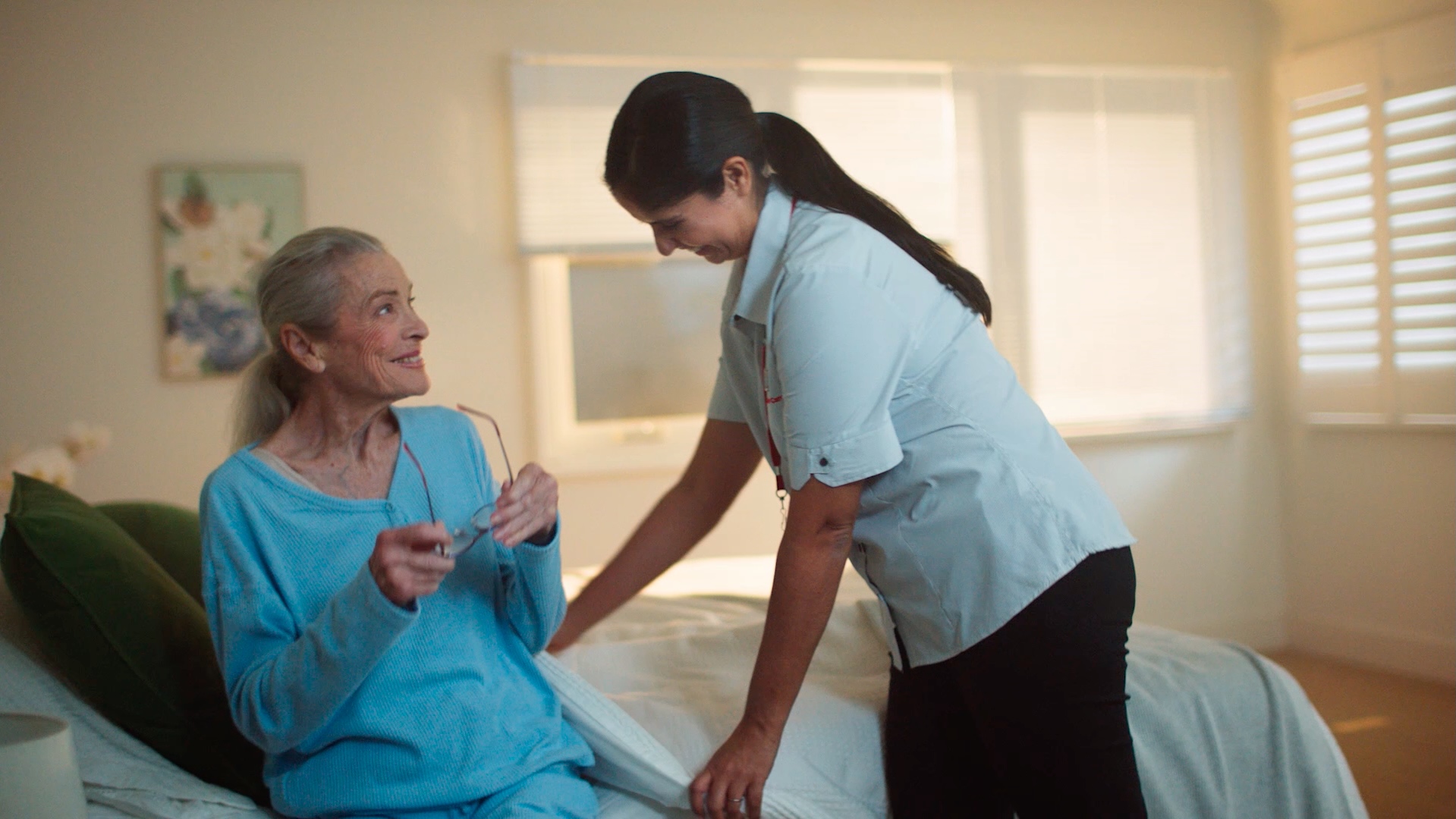
In-home assistance, or Support at Home, for older adults is the second half of the equation. Reliable, regular and ongoing assistance with the practical tasks that have quietly become harder. The support provided is about keeping the routine of someone’s life and their independence intact.
Ongoing Home Help for Seniors includes:
Around the house
Light cleaning, vacuuming, laundry, changing bed linen, putting the bins out, the small jobs that quietly slip when energy is lower.
Meals and shopping
Grocery shopping, batch-cooked meals, help with weekly menus. Good nutrition tends to be the first thing to deteriorate when someone is living alone.
Personal care
Help with showering, dressing and grooming, where needed. This is the area where consistency of carer matters most.
Getting out & about
Transport to appointments, the shops, family visits, group activities. Social connection is a genuine health input, not an optional extra.
Allied health and nursing
Brought to the home rather than the other way around, physiotherapy, podiatry, occupational therapy, medication management.
Overnight and 24-hour support
Where needed, after a hospital stay or for someone with more complex needs.
Most home help arrangements start small. A few hours a week of domestic assistance is a common starting point, with other services added as comfort with the concept of in-home care grows and needs shift.
What are the signs that it might be time to look into help at home?
Families often ask how to tell when home help is genuinely needed, rather than just useful. The honest answer is that there is rarely a single moment. The most reliable approach is to watch for a pattern over a few visits rather than reacting to any one thing.
Things worth noticing
1 | The home feels noticeably less clean or tidy than it used to |
2 | The fridge is regularly empty or contains food that is past its use-by date |
3 | Medication is not being taken correctly or is being forgotten |
4 | Personal hygiene has declined, clothing appears unwashed or worn for extended periods |
5 | There have been one or more unexplained falls, or near misses |
6 | Your parent or loved one seems more withdrawn, flat or socially isolated |
7 | They are cancelling plans or activities they previously enjoyed |
8 | Bills are going unpaid or important paperwork is being missed |
9 | You are spending more and more of your own time trying to keep things running |
Related reading
Read our article on Questions families ask about in-home aged care
How to have the conversation about in-home care with an elderly parent?
For many families, the hardest part is not finding the right support. It is raising the subject of help at home iin the first place. Concerns about how a parent will react, fear of damaging the relationship, or uncertainty about how to start the conversation are very common.
These are a few tips to have the conversation about help at home with your elderly parents or loved ones
Frame it around independence, not dependence
Most older Australians do not want to feel as though they are being managed or losing control. Framing home help as something that protects independence rather than replacing it, is usually more effective. “This would mean you can stay in your own home” lands differently to “we are worried you can’t cope.”
Start with something small and specific
Raising the idea of “getting someone in to help” in general terms can feel confronting. Starting with a specific and manageable suggestion like “would it be helpful to have someone come to help with the cleaning once a fortnight?” is less threatening and easier to agree to.
Listen more than you speak
Your parent may have fears, preferences or concerns that you are not fully aware of. Understanding what matters most to them, privacy, familiarity, being able to choose who comes into their home, puts you in a much better position to find support that actually works.
Give them agency in the decision
If your parent feels as though home help is being arranged for them rather than with them, resistance is more likely. Involving them in choosing a provider, selecting a carer or deciding the schedule goes a long way.
Related reading
How to start the conversation about home care with your parentsWhat does a typical home help arrangement look like?
Home help (also referred to as in-home care, home care and support services in the home) is not a one-size-fits-all arrangement. Everyone is different and so too is their support requirements which can range from a couple of hours a week through to daily visits or around-the-clock care, and the support can be adjusted as needs change over time.
A common starting point for many families is a domestic assistance (also referred to as help around the home) perhaps two to three hours for light household work such as tidying and laundry. As comfort with the concept of home care and rapport builds with the support worker, additional services can be added.
A care plan is typically developed at the outset, in conversation with the individual and supported by their family. The care plan outlines the support to be provided, how often, and by whom, and it should be reviewed and updated regularly to reflect any changes in health, mobility or personal preferences.
Good to know
The best home help arrangements are personalised the the individual not a fixed service menu. Look for a provider who takes the time to understand your loved one’s preferences, daily rhythms and goals.
How do you find and choose a home help provider?
There is no shortage of home care providers in Australia, but quality and fit can vary considerably.
Here are some criteria to look for when evaluating home care providers in your local area:
Local presence and knowledge
A provider with a team that genuinely knows your area is better placed to match your loved one with the right support workers, respond quickly to changing needs and build the kind of consistent relationships that make care effective.
Consistency of carers
Continuity matters enormously in home care. The relationship between a senior and their support worker is central to wellbeing. Ask any provider how they approach carer matching and what happens when a regular carer is unavailable.
Flexibility and responsiveness
Needs change, sometimes quickly. A good provider will be able to increase or adjust services without putting you through weeks of administration. Ask how quickly they can respond to a change in circumstances.
Transparency about costs
Whether you are accessing privately funded support or government-funded services, pricing should be clear and easy to understand. Ask for a written service agreement before committing to anything.
Understanding your funding options
Home help for seniors can be accessed either privately, where you pay for the support you choose or through government funding programs. Both options are worth understanding.
Private Home Care
Private (self-funded) home care gives you the most flexibility. There is no waitlist or ACAT assessment process and you can begin as quickly as the provider can arrange the intake paperwork and schedule the first visit. You choose the services and the level of support that suits you or your family. Private care is particularly well-suited for people who want additional support that falls outside of their government-funded categories, or simply do not want to wait.
Private Home Care Services: Flexible Support Without the Waitlist
Government-subidised Support at Home
The Australian Government's Support at Home program provides funding for eligible older Australians towards the cost of in-home support services. To access this funding, an assessment through My Aged Care is required. While there can be some lead time between applying and receiving funded services, it is worth starting the process early.
Help at Home from Just Better Care
Locally owned and operated Just Better Care offices across Australia provide the full range of in-home support from personal care, domestic assistance and transport through to allied health, in-home nurising and specialised dementia support.
Get Started with Help at HomeHow to help elderly parents stay independent and at home?
It is very common for families to delay arranging home help until things feel genuinely difficult, or until something goes wrong. A fall, a health episode, or a sudden decline can force decisions that feel rushed.
The families who tend to feel most confident about their arrangements are those who started the conversation early, while there was time to explore options without pressure, involve their loved one in the decisions, and build a relationship with a provider before needs became urgent.
If you are at the stage of wondering whether home help might be useful for someone you care about, that is exactly the right time to make an enquiry with your local Just Better Care office
Read our article about Home Care for the Elderly in Their Own Homes.
How Just Better Care supports families with help in their own home?
Every Just Better Care offices is indepdently owned and operated with a locations in the community they serve and a team of dedicated professionals who live and work in the local community, which shapes how the service feels on the ground:
What you can expect from Just Better Care includes:
- Local teams. Your local Just Better Care team members are recruited, trained and managed locally, so the same familiar faces visit each week.
- Carefully matched support. Continuity of carer matters in home care. Your local Franchise Owners take time to match support workers to the person, not just the schedule.
- Flexible service mix. Domestic help, personal care, transport, social support and allied health can be combined and adjusted as needs change.
- Specialised dementia support for people living with dementia or those caring for a loved one. See our specialised dementia support page.
- Private and funded pathways. Whether you are paying privately or accessing a government funded program such as the Support at Home program, your local Just Better Care office can walk you through the options.
To get started, find your closest Just Better Care office and have a chat with the local team. There is no obligation, Just a straightforward conversation about what would actually help the situation.
Ready to get started with help at home?
Talk to your local Just Better Care office about practical, flexible support that helps older Australians stay safely and independently at home.